Trending...
- Massive Acquisition Into Defense With STS for Virtuix Holdings; $40 Million Revenue Business Will Accelerate Growth Transforming Market Position - 171
- Orlando Real Estate Broker Bent Danholm Wins 2026 Goody Business Book Award for The Architecture of Demand - 155
- UK Financial Ltd Launches MayaSwap On MAYA CHAIN To Facilitate UKFLMS-For-Gold Swaps, Officially Transforming UKFLMS From Meme Into A Real-World Asset - 122
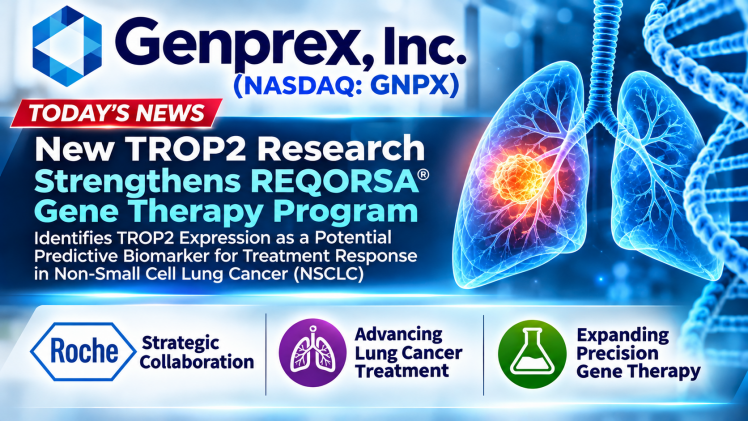

New Preclinical Findings Show TROP2 Levels May Help Predict REQORSA Treatment Response—and That Modifying TROP2 Expression May Increase Cancer Cell Sensitivity to Gene Therapy. Combined With the Roche Diagnostics Collaboration, Expanding TUSC2 Research and Advancing Clinical Programs, Genprex, Inc. (NAS DAQ: GNPX) Is Building Significant Momentum Across Its Innovative Biotechnology Platform.
AUSTIN, Texas - eTravelWire -- Genprex, Inc. (N A S D A Q: GNPX) $GNPX is bringing another exciting development to its growing gene therapy story with today's November 19 announcement of new preclinical data identifying TROP2 as a potential predictive biomarker for its lead investigational therapy, REQORSA® (quaratusugene ozeplasmid). Presented at the 2026 EORTC-NCI-AACR Symposium on Molecular Targets and Cancer Therapeutics in Barcelona, Spain, the research offers important new insights into how TROP2 expression may influence the response of non-small cell lung cancer (NSCLC) to REQORSA.
What makes today's announcement especially interesting is that researchers are investigating more than simply whether TROP2 can identify patients likely to respond. The new findings also suggest that changing TROP2 expression may influence how cancer cells respond to TUSC2 gene therapy, potentially opening another avenue for improving treatment sensitivity.
For Genprex investors, this represents an important addition to an increasingly sophisticated precision-oncology strategy. The company is working to combine its innovative gene therapy platform with biomarker research that could help researchers better understand treatment response and identify patients who may benefit most.
Today's Big News: TROP2 Research Reveals Another Potential Advantage for REQORSA
The November 19 announcement highlights findings from research titled "TROP2 Predicts Response to TUSC2 Gene Therapy and Its Modulation Sensitizes Non-Small Cell Lung Cancer to Treatment."
Researchers evaluated multiple NSCLC cell lines and patient-derived organoid models to investigate the relationship between TROP2 expression and response to TUSC2 gene delivery.
The findings were particularly noteworthy:
Perhaps the most intriguing aspect involved experiments examining whether changing TROP2 expression could influence treatment sensitivity.
Researchers introduced TROP2 into TROP2-low NSCLC cancer cells, including H460 and H1299 models. This significantly increased TUSC2-induced apoptosis, bringing the response to levels similar to cells naturally expressing higher TROP2.
More on eTravel Wire
This is an important scientific observation because it suggests TROP2 may have a role beyond simply identifying tumors that respond differently. Modifying its expression could potentially become another research strategy for enhancing REQORSA treatment.
The company believes these findings could help inform future patient-selection strategies and additional research into improving treatment response.
Roche Diagnostics Collaboration: A Powerful Addition to Genprex's Strategy
One of Genprex's most important strategic developments remains its collaboration with Roche Diagnostics, announced August 3.
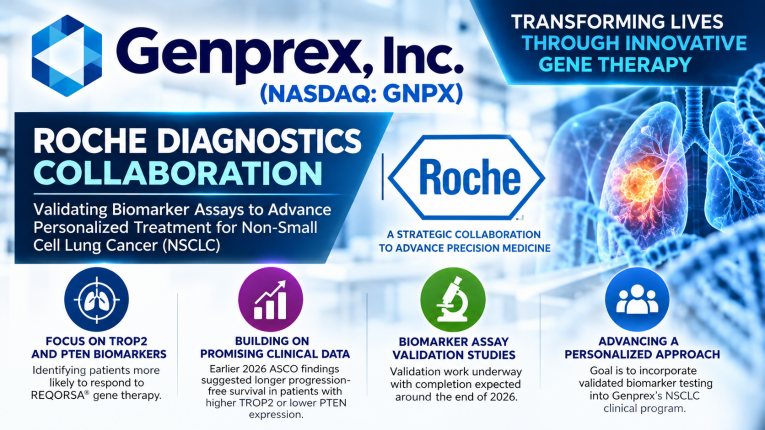
The collaboration focuses on validating biomarker assays for non-small cell lung cancer, with particular attention to TROP2 and PTEN.
Roche brings extensive diagnostic expertise to the relationship, while Genprex contributes its developing REQORSA gene therapy platform and growing body of clinical and preclinical research.
The objective is to develop a more refined approach to identifying patients who may be more likely to benefit from REQORSA.
Previous clinical research suggested that higher TROP2 expression and lower PTEN expression were associated with longer progression-free survival in certain NSCLC patient groups.
Today's new findings add another important scientific component to this collaboration by providing additional evidence supporting the investigation of TROP2 as a potential predictive biomarker.
Genprex anticipated completing the Roche-related assay validation studies around the end of 2026, with potential incorporation into its NSCLC clinical program following successful validation.
The combination of Roche's diagnostic capabilities and Genprex's gene therapy research could become an important part of the company's precision-medicine strategy.
REQORSA: Advancing an Innovative Approach to Lung Cancer
At the center of Genprex's oncology platform is REQORSA, also known as quaratusugene ozeplasmid.
The investigational therapy is designed to deliver the TUSC2 tumor-suppressor gene into cancer cells using Genprex's proprietary ONCOPREX Delivery System, which utilizes lipid-based nanoparticles.
TUSC2 expression is reduced or absent in more than 80% of NSCLC cases and nearly all small cell lung cancers, making it an important target for investigation.
REQORSA is designed to restore tumor-suppressor activity and influence multiple biological pathways involved in cancer progression, including MAPK and mTOR signaling, cell-cycle regulation and programmed cancer-cell death.
Genprex is advancing two important clinical initiatives:
Acclaim-1: Evaluating REQORSA in combination with AstraZeneca's Tagrisso in patients with advanced NSCLC carrying specific EGFR mutations.
Acclaim-3: Evaluating REQORSA in an extensive-stage small cell lung cancer treatment strategy.
Both programs have received FDA Fast Track designation, while the small cell lung cancer program has also received Orphan Drug Designation.
New TUSC2 Research Expands the Scientific Story
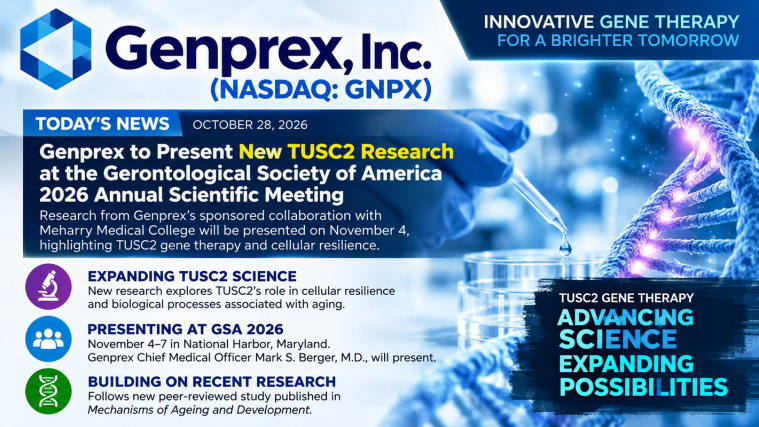
Genprex has also been generating interest through its sponsored research collaboration with Meharry Medical College.
More on eTravel Wire
Recent research has examined TUSC2's role in cellular resilience, mitochondrial function and biological processes associated with aging.
On November 5, the company highlighted patient-derived research involving blood samples from 11 lung cancer patients receiving REQORSA. Researchers identified changes in gene-expression patterns associated with mitochondrial adaptation, autophagy, cellular maintenance and protein quality control.
These findings add another dimension to the understanding of TUSC2's biological activity in humans and complement the company's broader scientific investigation.
Diabetes Gene Therapy Adds Another Development Opportunity
Beyond oncology, Genprex is pursuing an additional opportunity through its diabetes gene therapy program.
The approach uses AAV technology to deliver Pdx1 and MafA genes to the pancreas, with the objective of restoring insulin-producing cell function.
Preclinical studies have produced encouraging findings in Type 1 and Type 2 diabetes models, including improvements in glucose control and insulin-related measures.
In August, Genprex announced the selection of a U.S.-based contract development and manufacturing organization to begin manufacturing scale-up for its diabetes gene therapy candidate.
This provides another important development program as the company works toward future clinical research.
The Road Ahead: Important Catalysts for GNPX Investors
Genprex has several important developments to watch as 2026 progresses:
Genprex Is Building an Intriguing Precision Gene Therapy Platform
Today's November 19 announcement adds another important milestone to Genprex's developing story. The TROP2 findings are particularly interesting because they suggest two potential opportunities: identifying patients more likely to respond to REQORSA and investigating whether changing TROP2 expression could increase treatment sensitivity.
Combined with the Roche Diagnostics collaboration, these findings strengthen the scientific foundation behind Genprex's precision-oncology ambitions.
The company's continued TUSC2 research, advancing lung cancer clinical programs and separate diabetes gene therapy initiative provide multiple areas of development to follow.
For investors watching emerging biotechnology opportunities, Genprex is building an increasingly compelling story around innovative gene therapy, strategic diagnostic collaboration and personalized cancer treatment. With today's new TROP2 findings adding another exciting dimension to REQORSA, GNPX has important scientific milestones ahead as it works to translate its research into meaningful clinical progress.
For more information on $GNPX visit: www.genprex.com and https://compasslivemedia.com/gnpx/
Media Contact:
Company Name: Genprex, Inc.
Contact: Kalyn Dabbs
Email: media@genprex.com
Phone: (877) 774-GNPX (4679)
Country: United States
Website: www.genprex.com
DISCLAIMER: https://corporateads.com/disclaimer/
Disclosure listed on the CorporateAds website
What makes today's announcement especially interesting is that researchers are investigating more than simply whether TROP2 can identify patients likely to respond. The new findings also suggest that changing TROP2 expression may influence how cancer cells respond to TUSC2 gene therapy, potentially opening another avenue for improving treatment sensitivity.
For Genprex investors, this represents an important addition to an increasingly sophisticated precision-oncology strategy. The company is working to combine its innovative gene therapy platform with biomarker research that could help researchers better understand treatment response and identify patients who may benefit most.
Today's Big News: TROP2 Research Reveals Another Potential Advantage for REQORSA
The November 19 announcement highlights findings from research titled "TROP2 Predicts Response to TUSC2 Gene Therapy and Its Modulation Sensitizes Non-Small Cell Lung Cancer to Treatment."
Researchers evaluated multiple NSCLC cell lines and patient-derived organoid models to investigate the relationship between TROP2 expression and response to TUSC2 gene delivery.
The findings were particularly noteworthy:
- Approximately 50% of the 10 NSCLC cell lines evaluated demonstrated primary resistance to TUSC2 gene delivery.
- Approximately 50% of the 12 patient-derived organoid models also demonstrated primary resistance.
- Low TROP2 protein expression was consistently associated with primary resistance across multiple preclinical models.
- Analysis of pretreatment tumor biopsies from patients enrolled in a TUSC2 gene therapy clinical trial provided additional supporting evidence.
Perhaps the most intriguing aspect involved experiments examining whether changing TROP2 expression could influence treatment sensitivity.
Researchers introduced TROP2 into TROP2-low NSCLC cancer cells, including H460 and H1299 models. This significantly increased TUSC2-induced apoptosis, bringing the response to levels similar to cells naturally expressing higher TROP2.
More on eTravel Wire
- KayeDinero Takes Viewers Above Asheville in "Autumn in the Blue Ridge" Aerial Visual
- Travel recruitment eases in October
- PinnacleQM launches new enterprise website to help Australian organisations deliver more with confidence
- Loud! OOH Launches UK's First Free Planning Tool for UK Outdoor Advertising Budgets
- FlightFlex Launches in Canada: A Curated One-Stop Travel Platform for Canada–Asia Travel
This is an important scientific observation because it suggests TROP2 may have a role beyond simply identifying tumors that respond differently. Modifying its expression could potentially become another research strategy for enhancing REQORSA treatment.
The company believes these findings could help inform future patient-selection strategies and additional research into improving treatment response.
Roche Diagnostics Collaboration: A Powerful Addition to Genprex's Strategy
One of Genprex's most important strategic developments remains its collaboration with Roche Diagnostics, announced August 3.
The collaboration focuses on validating biomarker assays for non-small cell lung cancer, with particular attention to TROP2 and PTEN.
Roche brings extensive diagnostic expertise to the relationship, while Genprex contributes its developing REQORSA gene therapy platform and growing body of clinical and preclinical research.
The objective is to develop a more refined approach to identifying patients who may be more likely to benefit from REQORSA.
Previous clinical research suggested that higher TROP2 expression and lower PTEN expression were associated with longer progression-free survival in certain NSCLC patient groups.
Today's new findings add another important scientific component to this collaboration by providing additional evidence supporting the investigation of TROP2 as a potential predictive biomarker.
Genprex anticipated completing the Roche-related assay validation studies around the end of 2026, with potential incorporation into its NSCLC clinical program following successful validation.
The combination of Roche's diagnostic capabilities and Genprex's gene therapy research could become an important part of the company's precision-medicine strategy.
REQORSA: Advancing an Innovative Approach to Lung Cancer
At the center of Genprex's oncology platform is REQORSA, also known as quaratusugene ozeplasmid.
The investigational therapy is designed to deliver the TUSC2 tumor-suppressor gene into cancer cells using Genprex's proprietary ONCOPREX Delivery System, which utilizes lipid-based nanoparticles.
TUSC2 expression is reduced or absent in more than 80% of NSCLC cases and nearly all small cell lung cancers, making it an important target for investigation.
REQORSA is designed to restore tumor-suppressor activity and influence multiple biological pathways involved in cancer progression, including MAPK and mTOR signaling, cell-cycle regulation and programmed cancer-cell death.
Genprex is advancing two important clinical initiatives:
Acclaim-1: Evaluating REQORSA in combination with AstraZeneca's Tagrisso in patients with advanced NSCLC carrying specific EGFR mutations.
Acclaim-3: Evaluating REQORSA in an extensive-stage small cell lung cancer treatment strategy.
Both programs have received FDA Fast Track designation, while the small cell lung cancer program has also received Orphan Drug Designation.
New TUSC2 Research Expands the Scientific Story
Genprex has also been generating interest through its sponsored research collaboration with Meharry Medical College.
More on eTravel Wire
- Boston Industrial Solutions Introduces the New Volta® M100 Pad Printing Machine
- Not a Black Box Launches TalentOS, the First Talent Harness Operating System
- A Diwali Celebration with Heritage at South Brunswick Residents & American Properties
- Law Offices of Larry E. Bray, P.A. Wins Fourth District Appeal Clarifying Limits of Florida's Offer of Judgment Statute
- Holiday Magic Returns to Downtown Downers Grove November 27-29
Recent research has examined TUSC2's role in cellular resilience, mitochondrial function and biological processes associated with aging.
On November 5, the company highlighted patient-derived research involving blood samples from 11 lung cancer patients receiving REQORSA. Researchers identified changes in gene-expression patterns associated with mitochondrial adaptation, autophagy, cellular maintenance and protein quality control.
These findings add another dimension to the understanding of TUSC2's biological activity in humans and complement the company's broader scientific investigation.
Diabetes Gene Therapy Adds Another Development Opportunity
Beyond oncology, Genprex is pursuing an additional opportunity through its diabetes gene therapy program.
The approach uses AAV technology to deliver Pdx1 and MafA genes to the pancreas, with the objective of restoring insulin-producing cell function.
Preclinical studies have produced encouraging findings in Type 1 and Type 2 diabetes models, including improvements in glucose control and insulin-related measures.
In August, Genprex announced the selection of a U.S.-based contract development and manufacturing organization to begin manufacturing scale-up for its diabetes gene therapy candidate.
This provides another important development program as the company works toward future clinical research.
The Road Ahead: Important Catalysts for GNPX Investors
Genprex has several important developments to watch as 2026 progresses:
- Continued investigation of TROP2 as a potential predictive biomarker for REQORSA.
- Further research into whether TROP2 modulation can enhance treatment sensitivity.
- Anticipated completion of Roche Diagnostics biomarker assay validation.
- Continued advancement of the Acclaim-1 and Acclaim-3 clinical programs.
- Additional TUSC2 research and diabetes gene therapy development.
Genprex Is Building an Intriguing Precision Gene Therapy Platform
Today's November 19 announcement adds another important milestone to Genprex's developing story. The TROP2 findings are particularly interesting because they suggest two potential opportunities: identifying patients more likely to respond to REQORSA and investigating whether changing TROP2 expression could increase treatment sensitivity.
Combined with the Roche Diagnostics collaboration, these findings strengthen the scientific foundation behind Genprex's precision-oncology ambitions.
The company's continued TUSC2 research, advancing lung cancer clinical programs and separate diabetes gene therapy initiative provide multiple areas of development to follow.
For investors watching emerging biotechnology opportunities, Genprex is building an increasingly compelling story around innovative gene therapy, strategic diagnostic collaboration and personalized cancer treatment. With today's new TROP2 findings adding another exciting dimension to REQORSA, GNPX has important scientific milestones ahead as it works to translate its research into meaningful clinical progress.
For more information on $GNPX visit: www.genprex.com and https://compasslivemedia.com/gnpx/
Media Contact:
Company Name: Genprex, Inc.
Contact: Kalyn Dabbs
Email: media@genprex.com
Phone: (877) 774-GNPX (4679)
Country: United States
Website: www.genprex.com
DISCLAIMER: https://corporateads.com/disclaimer/
Disclosure listed on the CorporateAds website
Source: CorporateAds
0 Comments
Latest on eTravel Wire
- UK Financial Ltd Launches MayaSwap On MAYA CHAIN To Facilitate UKFLMS-For-Gold Swaps, Officially Transforming UKFLMS From Meme Into A Real-World Asset
- Entrepreneur Nouho M Kanneh Talks Family, Faith and a $37 Million Portfolio in New Interview
- Emerald Williams Selected to Super Lawyers Rising Stars 2022-2026
- South Seas brings a tropical twist to the holidays with festive celebrations on Captiva Island
- Massive Acquisition Into Defense With STS for Virtuix Holdings; $40 Million Revenue Business Will Accelerate Growth Transforming Market Position
- Orlando Real Estate Broker Bent Danholm Wins 2026 Goody Business Book Award for The Architecture of Demand
- Commercial Sales for U.S.-Made, Preservative-Free Ketamine Amid Long-Runnin Shortage Following FDA Approval by NRx Pharmaceuticals, Inc
- The King Returns: Satirical December 2026 Rematch Sees Challenger Delayed by a Christmas Light Installation
- LCH2 Awarded Additional $1 Million to Advance Lewis County Clean Energy Campus
- Security Planning Tips For Your Holiday Event From Access Patrol Services
- Travel Deals For Solo Women Announced - Morocco and Costa Rica
- Everyone Books Cancun for the Beach. Nobody Books It for the Airport SIM Line
- Contracting Resources Group Receives 2026 HIRE Vets Platinum Medallion Award
- Business News & Info Goes Inside Paragon FX Group's Hunt for Original Film Props
- Kitchen Table Economics: An Invitation to Think Differently
- Win a $5,000 VIP Family Experience at the 100th Thanksgiving Day Parade in New York City
- CB Stuffer Announces Private Sale to Secure Future of Brand Growth
- The Fifth Annual "Bamboo Lantern Festival" to Illuminate Tokyo Mizumachi and Sumida River Walk®
- Iglesia.com Positioned in Multimillion-Dollar Domain Market with $10 Million Asking Price
- TCA VG: 2025 Funding Climbs to $9M across 43 Companies; Cumulative Returns Reach 5.3 MOIC & 22% IRR